

Jennifer Doudna, co-inventor of CRISPR-Cas9 gene editing, had a recurring dream of a tsunami approaching her on a beach. In her mind, that wave represented the powerful transformation that the technology would bring.
CRISPR did herald a new era for molecular biology research. The ability to rapidly and specifically insert or remove genetic sequences removed significant barriers to understanding the complexities of biology at a cellular level.
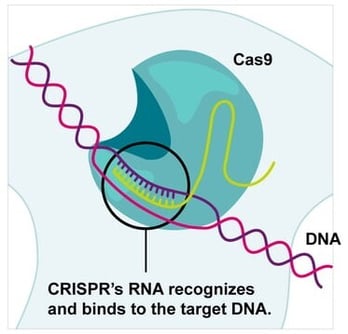 Figure 1: A representation of how the sgRNA guides the Cas9 to cleave the target DNA.
 Over the past decade, CRISPR has evolved to create a vast array of techniques that have expanded its functionality. It can even screen the function of thousands of genes using vast pooled libraries to introduce edits across the genome, all thanks to advanced competent cells that stabilise the complex plasmids required.
Endura cells enable genome-wide functional analysis
A prominent example of CRISPR-based screening is GeCKO (Genome-Scale CRISPR Knockout), which allows researchers to systematically silence each gene across the genome. This high throughput pooled technique, developed by Feng Zhang at the Broad Institute, provides a way to understand the function of each gene, identify drivers of drug resistance and discover new therapeutic targets.
This ability was demonstrated in the first study introducing GeCKO, which identified mutations that caused a melanoma model to become resistant to the drug vemurafenib.1 Before GeCKO, scientists would rely on RNA interference methods, but the specificity and efficacy of the CRISPR-based method provides much clearer results that can be interpreted more reliably.
One of the key challenges for pooled techniques like GeCKO is ensuring that the vast sequence libraries are represented uniformly.
GeCKO uses a library of tens of thousands of plasmid vectors containing different single guide RNA (sgRNA) sequences. The library needs to be amplified to produce sufficient quantities of DNA for lentivirus production.
 For CRISPR applications requiring lentiviral delivery, researchers first clone their guide RNA and/or Cas9 expression cassette into a viral backbone. These large viral vectors often have repetitive or unstable elements.
Standard strains of E. coli competent cells sometimes delete or rearrange such sequences via recombination, leading to plasmid instability. This variability in performance can lead to a loss of library diversity and skew the representation of sgRNAs.
To overcome this, Zhang’s protocol uses Endura™ electrocompetent cells, which are optimised for stable cloning of difficult DNA sequences.2 Endura cells also have high transformation efficiency even when working with large or complex plasmids to ensure that the entire library is represented without loss of diversity. This significantly enhances the reliability and reproducibility of genome-wide pooled screening experiments.
Endura competent cells were previously produced by Lucigen, which became part of LGC group in 2018.
Using Endura to advance immunotherapies and cell therapies
Genome-wide pooled CRISPR screens like GeCKO are expanding our understanding of the body’s response to disease and how to develop new treatments. This could help lead to new immunotherapies and improve the efficacy of cell therapies for cancer.
For example, researchers have been able to adapt genome-wide CRISPR screens to gain an unparalleled insight into the activity of human T cells.3
This was particularly challenging to achieve because of the difficulty in expressing Cas9 in T cells and the cells’ short life span ex vivo. However, by electroporating Cas9 into the T cells and using Endura competent cells to propagate the library, the team could identify key regulators of immune function.
Further advances, such as CRISPR activation (CRISPRa) and interference (CRISPRi), also rely heavily on Endura cells. This approach uses a deactivated Cas9 protein to target gene promotors to overexpress or knockdown a desired gene without making double-strand breaks.
Schmidt et al. used Endura competent cells for CRISPRa and CRISPRi to map the gene networks in human T cells.4 The screen found key changes that can alter the behaviour of T cells in relation to disease, indicating the value of this approach for identifying new therapeutic targets.
 These screening methods can also be useful for improving cell therapies like chimeric antigen receptor (CAR)-T cells. These therapies have shown success in some cancer patients, but relapse remains a serious concern in many cases. A study using CRISPR activation in CAR-T cells revealed that increasing proline metabolism could improve their ability to kill multiple cancer models in vivo.5
Another genome-wide CRISPR knockout screen using Endura competent cells identified that interleukin-4 was a key regulator of CAR-T cells’ durability as a therapy.6 Blocking this protein through gene editing or a monoclonal antibody improved effectiveness against cancer and reduced signs of exhaustion.
These exhaustive whole-genome studies provide a vast amount of information on the role of specific genes in biological and pathological pathways. This powerful approach has rapidly expanded our knowledge for developing the next generation of cell therapies and immunotherapies.
Latest innovations in CRISPR pooled screening technology
Endura competent cells have continued to be used in further advances of CRISPR-based technologies that expand the capabilities and precision of pooled gene editing. These methods can go far beyond simply switching on or off a single gene at a time.
One example uses multiple guides per cell to probe genetic interactions, like synthetic lethal gene pairs in cancer.7 This requires even larger plasmids containing two promoters and sgRNAs.
Endura electrocompetent cells proved to be invaluable in preventing recombination issues in these unstable plasmids.8 This screening method allowed scientists to test over 100,000 drug target pairs to identify potential cancer treatment combinations.7
Newer technologies that allow precise editing without causing DNA double strand breaks have grown in popularity.
 Base editing uses a Cas protein that is fused to adenine or cytosine deaminases to deliver precise nucleotide changes. Researchers have used this technique to systematically screen single nucleotide variants across the genome using a large-scale library of guide RNA plasmids.9 As with GeCKO, Endura competent cells help to avoid recombination, so the entire library of variants can be successfully screened.
Prime editing offers even greater flexibility in the edits that can be introduced. This uses a Cas9 nickase, reverse transcriptase and a guide RNA that also encodes the desired edit. Once the DNA target site has been nicked, the prime editing gRNA hybridises and the edit is incorporated into the DNA by reverse transcriptase.
Scientists have also used prime editing to screen large, pooled libraries, again using Endura cells, to progress towards the goal of “precise, efficient and multiplexable editing of any variant type across the genome”.10
While prime editing is limited to short edits, researchers are also working towards introducing longer stretches of sequences in DNA without double-strand breaks. Two papers published back-to-back in Nature Biotechnology in 2023 used Endura cells to develop new approaches for achieving this with DNA integrases.11,12
As CRISPR screening applications shift from simple knockouts to nuanced edits, the cloning demands will continue to increase. Endura competent cells meet those demands by enabling reliable construction and amplification of sophisticated gene-editing pooled libraries.
With these advances, researchers can develop improved therapeutics, from more effective engineered immune cells to unlocking vital gene interactions that reveal new drug target opportunities.

Further reading:
Optimise oligo synthesis for effective CRISPR therapeutics
The future of nucleic acid therapeutics
How to choose the right competent cells for phage display
References
- Shalem O et al. (2014) Genome-Scale CRISPR-Cas9 Knockout Screening in Human Cells. Science. 343:84–87. doi: 1126/science.1247005
- Joung J et al. (2017) Genome-scale CRISPR-Cas9 Knockout and Transcriptional Activation Screening. Nat Protoc. 12(4): 828–863. doi:1038/nprot.2017.016
- Shifrut E et al. (2018) Genome-wide CRISPR Screens in Primary Human T Cells Reveal Key Regulators of Immune Function. Cell 175, 1958–1971. doi:1016/j.cell.2018.10.024
- Schmidt R et al. (2022) CRISPR activation and interference screens decode stimulation responses in primary human T cells. Science. 375(6580):eabj4008. doi: 1126/science.abj4008
- Ye L et al. (2022) A genome-scale gain-of-function CRISPR screen in CD8 T cells identifies proline metabolism as a means to enhance CAR-T therapy. Cell Metabolism. 34(4):595-614.e14. doi: 1016/j.cmet.2022.02.009
- Stewart CM et al. (2024) IL-4 drives exhaustion of CD8+ CART cells. Nature Communications. 15:7921. doi: 1038/s41467-024-51978-3
- Shen J et al. (2017) Combinatorial CRISPR–Cas9 screens for de novo mapping of genetic interactions. Nat Methods 14, 573–576. doi: 1038/nmeth.4225
- Tang S et al. (2022) Generation of dual-gRNA library for combinatorial CRISPR screening of synthetic lethal gene pairs. STAR Protoc. 3(3):101556. doi: 1016/j.xpro.2022.101556
- Ryu J et al. (2024) Joint genotypic and phenotypic outcome modeling improves base editing variant effect quantification. Nat Genet 56, 925–937. doi: 1038/s41588-024-01726-6
- Cirincione A et al. (2025) A benchmarked, high-efficiency prime editing platform for multiplexed dropout screening. Nat Methods 22, 92–101. doi: 1038/s41592-024-02502-4
- Durrant MG et al. (2023) Systematic discovery of recombinases for efficient integration of large DNA sequences into the human genome. Nat Biotechnol 41, 488–499. doi: 1038/s41587-022-01494-w
- Yarnall MTN et al. (2023) Drag-and-drop genome insertion of large sequences without double-strand DNA cleavage using CRISPR-directed integrases. Nat Biotechnol 41, 500–512. doi: 1038/s41587-022-01527-4
