

Nucleic acid therapeutics have the potential to treat a range of diseases but getting them where they are needed in the body remains one of the biggest hurdles.
Drugs like small interfering RNAs (siRNAs) and antisense oligonucleotides (ASOs) are large and highly charged. These properties mean they struggle to reach and enter target cells without chemical modifications.
Many of the successfully approved nucleic acid therapeutics target the liver, largely by conjugating the oligos to N-acetylgalactosamine (GalNAc). GalNAc ligands have featured in several siRNA drugs, helping to treat rare genetic diseases and high cholesterol.
However, for oligonucleotide therapeutics to deliver on their potential, they must be able to target a greater variety of tissues. One key approach is conjugating highly lipophilic groups to improve the oligos’ uptake and retention in the body.
Fatty acids are regularly transported across the cell membrane, making them a valuable option for drug delivery research.1 Several long-chain fatty acids have been explored for delivering therapeutic oligonucleotides to non-liver tissues, including:2
- lauric acid (C12)
- palmitic acid (C16)
- stearic acid (C18)
- docosanoic acid (C22)
- docosahexaenoic acid (22:6 n-3)
In addition, other lipophilic molecules like cholesterol and tocopherol (vitamin E) can be used to take advantage of the cell’s natural transport mechanisms to deliver therapeutics inside cells.
This blog post explores these modifications and how they influence the delivery and targeting of nucleic acid therapeutics.
Lauric acid (C12): Prolonging circulation
Lauric acid (dodecanoic acid) is a saturated fatty acid with a 12-carbon atom chain. Lauric acid conjugation prolongs the circulation time of oligonucleotides by binding strongly to albumin, an abundant plasma protein.3 This interaction reduces renal clearance and enhances therapeutic efficiency.
However, laurate is relatively small compared to the other lipophilic modifiers that we cover below and does not improve the circulation time of conjugated oligos by as much.
Figure 1. Lauric acid, or dodecanoic acid, CPG for attaching to the 3'-terminus of an oligonucleotide.
Palmitic acid (C16): Directing ASOs to muscle
Palmitic acid is a fatty acid with a 16-carbon chain. It is the most common saturated fatty acid in the human body and plays a crucial role in various physiological processes.
The longer carbon chain enhances the lipophilic properties of oligonucleotides more than lauric acid and significantly increases binding to plasma proteins.3,4
The conjugation of palmitic acid to oligos facilitates their delivery to muscle tissue.3 This can be particularly useful for developing treatments for Duchenne muscular dystrophy or heart failure.
Palmitic acid has also been used to modify imetelstat (Rytelo®), a thio-phosphoramidate oligonucleotide, to enhance entry into cells and the potency of telomerase inhibition.5,6

Figure 2. The 3'-Palmitamido-C6-dR CPG includes a six-carbon spacer to alleviate the steric effects of the group.
Hexadecyl (C16): Targeting Alzheimer’s

A hexadecyl lipophilic chain (C16) conjugated to the 2'-O position of the ribose group in an siRNA can help the molecule reach the central nervous system, eye and lung.7
Alnylam Pharmaceuticals used this lipophilic 2'-O-C16 modifier in its drug candidate mivelsiran/ALN-APP. This molecule is in clinical trials for Alzheimer’s and initial results show that mivelsiran lowers levels of the target protein in the cerebrospinal fluid.8
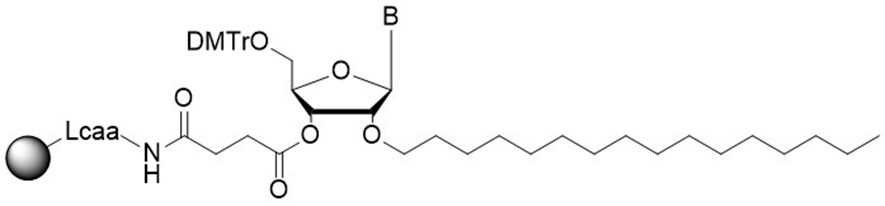
Figure 3. CPG for attaching a hexadecyl moiety to the 3'-terminus of an oligonucleotide conjugated 2'-O position of the ribose group.
Docosanoic acid (C22): Boosting uptake of siRNAs
Docosanoic acid (DCA) is a 22-carbon chain saturated fatty acid that binds tightly to low-density lipoproteins (LDL) and accumulates in the liver.9 It can also reach several other tissues, for example muscle and skin.1,10
DCA-conjugated siRNAs reduced target protein levels by up to 80% in mice without causing elevated cytokine levels.1
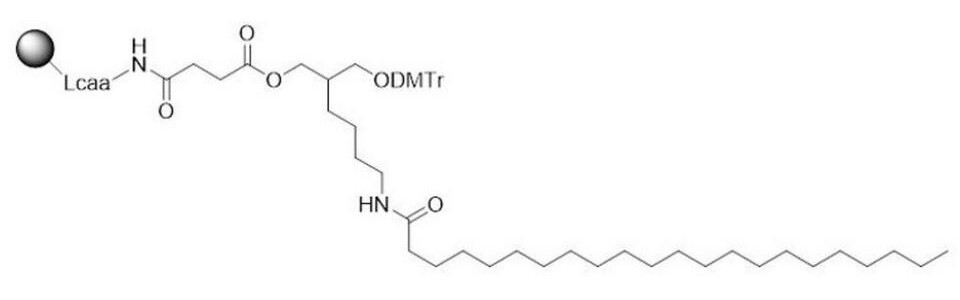
Figure 4. CPG for attaching a docosanoate chain to the 3'-terminus of an oligonucleotide via a 7-carbon linker.
Cholesterol: Crossing the cell membrane
Cholesterol makes up a significant proportion of cellular membranes, allowing it to easily intercalate when it comes into contact. Introducing cholesterol residues into oligonucleotides to improve their penetration into cells achieved some early success.14,15
Cholesterol tends to be more concentrated in the liver than DCA, driven by its particularly tight binding to LDL and the high expression of LDL receptors in hepatocytes.16 This characteristic made cholesterol conjugation a promising approach for targeting the liver, including reaching clinical trials. However, this is now primarily achieved using GalNAc.17
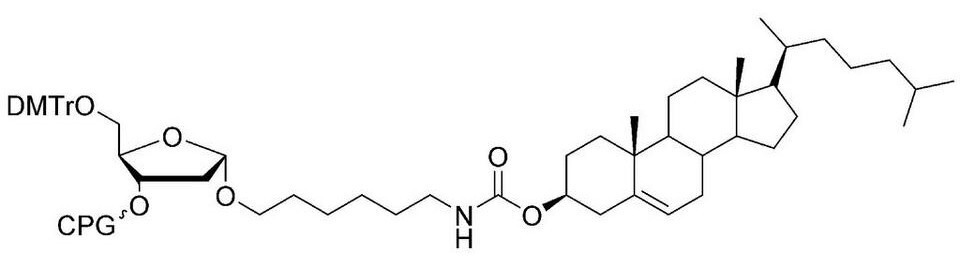
Figure 5. CPG for attaching a cholesterol group to the 3'-terminus of an oligonucleotide conjugated via a six-carbon spacer and a dR moiety.
Cholesterol-conjugated siRNAs can be delivered to muscles via intravenous injection.18 It has also been used in research studies to target the skin, eye and brain when administered directly to the site.17
Tocopherol: Improving delivery to the liver and brain
Tocopherol (vitamin E) is essential for cells and is easily transported from the bloodstream to the liver. siRNA conjugated to tocopherol can be successfully delivered to mouse livers without side effects.19
When tocopherol-conjugated siRNA is incubated with HDL, it can down-regulate a target gene in the brain if directly infused.20
Tocopherol has also been used to improve the performance of liver-targeted ASOs in laboratory experiments.21
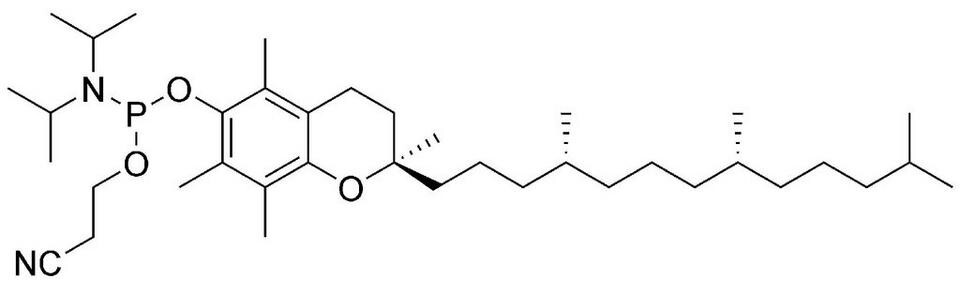
Figure 6. Phosphoramidite for attaching a tocopherol group to the 5'-terminus of an oligonucleotide.
Lipophilic modifiers to suit your needs
The wide variety of lipophilic modifiers available provides countless opportunities to tailor nucleic acid therapeutics to target cells beyond the liver. This can greatly expand the range of diseases and conditions that are treatable with this approach.
For more details about lipophilic modifiers for targeted delivery, download our latest white paper. The comprehensive review includes further information about their applications and covers the expanded portfolio of modifications that are available to you.

Related Posts
Reference
1. Biscans A et al. (2021) Docosanoic acid conjugation to siRNA enables functional and safe delivery to skeletal and cardiac muscles. Molecular Therapy 29(4):1382-1394 doi: 10.1016/j.ymthe.2020.12.023
2. Biscans A et al. (2019) Diverse lipid conjugates for functional extra-hepatic siRNA delivery in vivo. Nucleic Acids Research 47(3):1082–1096 doi: 10.1093/nar/gky1239
3. Prakash TP et al. (2019) Fatty acid conjugation enhances potency of antisense oligonucleotides in muscle. Nucleic Acids Research 47(12):6029-6044. doi: 10.1093/nar/gkz354
4. Hvam ML et al. (2017) Fatty Acid-Modified Gapmer Antisense Oligonucleotide and Serum Albumin Constructs for Pharmacokinetic Modulation. Molecular Therapy 25(7):1710-1717. doi: 10.1016/j.ymthe.2017.05.009
5. Herbert BS et al. (2005) Lipid modification of GNR163, an N3’ P5’ thio-phosphoramidate oligonucleotide, enhances the potency of telomerase inhibition. Oncogene 24:5262-5268 doi: 10.1038/sj.onc.1208760
6. Lennox et al. (2024) Imetelstat, a novel, first‐in‐class telomerase inhibitor: Mechanism of action, clinical, and translational science. Clin Transl Sci 17(11):e70076 doi: 10.1111/cts.70076
7. Brown KM et al. (2022) Expanding RNAi therapeutics to extrahepatic tissues with lipophilic conjugates. Nat Biotechnol 40(10):1500-1508 doi: 10.1038/s41587-022-01334-x
8. Cohen S et al. (2025) Single ascending dose results from an ongoing Phase 1 study of mivelsiran (ALN-APP), the first investigational RNA interference therapeutic targeting amyloid precursor protein for Alzheimer’s disease. Alzheimer’s and Dementia e084521 doi: 10.1002/alz.084521
9. Lee JW et al. (2022) Molecularly engineered siRNA conjugates for tumor-targeted RNAi therapy. J Control Release 351:713-726. doi: 10.1016/j.jconrel.2022.09.040
10. Tang Q et al. (2022) RNAi-based modulation of IFN-γ signaling in skin. Molecular Therapy 30(8):2709–2721 doi: 10.1016/j.ymthe.2022.04.019
11. Osborn et al. (2019) Hydrophobicity drives the systemic distribution of lipid-conjugated siRNAs via lipid transport pathways. Nucleic Acids Research 47(3):1070–1081 doi: 10.1093/nar/gky1232
12. Mangla P, Vicentini Q and Biscans A (2023) Therapeutic Oligonucleotides: An Outlook on Chemical Strategies to Improve Endosomal Trafficking. Cells 12(18):2253. doi: 10.3390/cells12182253
13. Nikan M et al. (2016) Docosahexaenoic Acid Conjugation Enhances Distribution and Safety of siRNA upon Local Administration in Mouse Brain. Mol. Ther. Nucleic Acids 5:e344 doi: 10.1038/mtna.2016.50
14. Holasová Š et al. (2005) Cholesterol conjugated oligonucleotide and LNA: A comparison of cellular and nuclear uptake by Hep2 cells enhanced by Streptolysin-O. Molecular and Cellular Biochem 276: 61-69 doi: 10.1007/s11010-005-2912-8
15. Soutschek J et al. (2004) Therapeutic silencing of an endogenous gene by systemic administration of modified siRNAs. Nature 432:173-178 doi: 10.1038/nature03121
16. Lee JW et al. (2022) Molecularly engineered siRNA conjugates for tumor-targeted RNAi therapy. J Control Release 351:713-726. doi: 10.1016/j.jconrel.2022.09.040
17. Osborn MF and Khvorova A (2018) Improving siRNA Delivery In Vivo Through Lipid Conjugation. Nucleic Acid Ther. 28(3):128–136. doi: 10.1089/nat.2018.0725
18. Khan T et al. (2016) Silencing myostatin using cholesterol-conjugated siRNAs induces muscle growth. Mol. Ther. Nucleic Acids 5:e342 doi: 10.1038/mtna.2016.55
19. Nishina K et al. (2008) Efficient in vivo delivery of siRNA to the liver by conjugation of α-tocopherol. Molecular Therapy 16:724–740 doi: 10.1038/mt.2008.14
20. Uno Y et al. (2011) High-Density Lipoprotein Facilitates In Vivo Delivery of a-Tocopherol–Conjugated Short-Interfering RNA to the Brain. Human Gene Therapy 22:711–719 doi: 10.1089/hum.2010.083
21. Nishina T et al. (2015) Chimeric Antisense Oligonucleotide Conjugated to α-Tocopherol. Mol. Ther. Nucleic Acids 4:e220 doi: 10.1038/mtna.2014.72