---
title: Sustainable Oil Palm Breeding Programmes Using Marker Selection
description: Sime Darby Plantation improves the sustainability of oil palm breeding using marker-assisted selection (MAS) and genomic selection enabled by KASP™ genotyping.
image: https://blog.biosearchtech.com/hubfs/oil-palm-fruit_1120x360.jpg
---
[](https://www.biosearchtech.com/)

[Blog](https://blog.biosearchtech.com) / Improving the sustainability of oil palm breeding programmes using marker-assisted selection
# Improving the sustainability of oil palm breeding programmes using marker-assisted selection
[Agrigenomics](https://blog.biosearchtech.com/topic/agrigenomics) | [qPCR](https://blog.biosearchtech.com/topic/qpcr) | [PCR-based genotyping](https://blog.biosearchtech.com/topic/pcr-based-genotyping) |
**Time to read:** 4 minute read
Originally published : Tue, March 8, 2022 @ 3:41 AM
###### *Updated : Wed, March 9, 2022 @ 1:05 AM*
African oil palm (*Elaeis guineensis* Jacq.) is a highly productive perennial crop that is used widely in food, medicines, household products and fuels. Around half the world’s population consume palm oil as part of their diets1 and as of October 2017, around 18.7 million hectares of land are used throughout the tropics for industrial-scale oil palm plantations.2
The rising demand for oil palm products – driven by population growth and expanding middle classes – has led to high deforestation rates in some regions.2 This, along with the corresponding loss of biodiversity,2 is an urgent issue that the world must address.
Oil palm is a very high yielding oil crop and uses considerably less land than other oil crops, such as rapeseed, sunflower and soybean. It therefore plays a significant role in meeting the global demand for vegetable oil. Nevertheless, as global demand for vegetable oil is projected to soar from 165 million tonnes in 2013 to 310 million tonnes by 2050,2 producers must find a way to increase oil palm yield in a sustainable way to meet this growing demand.
One of the ways to do this is to use agrigenomic techniques to increase oil palm yield on existing agricultural lands, without expanding into new areas. Sime Darby Plantation (SDP), in partnership with LGC, Biosearch Technologies, have been leading the way with these techniques, demonstrating that deforestation is not required to feed global population growth.
**Oil palm breeding programmes**
Plantation owners can use breeding programmes to select for oil palms that are likely to have a high oil yield, in addition to other traits of interest such as slow height increment, drought tolerance and a high ratio of female to male inflorescences. Conventional breeding programmes are slow due to the number of years it takes for the oil palms to reach maturity. While oil yield can be improved this way, it can take up to 20 years to complete a phenotypic selection cycle.
Many plantation owners use clonal propagation by tissue culture methods to reproduce their best plants. This method has a high cost and can result in somaclonal variation, potentially causing a loss of key traits. Planting clonal palms also leads to rapid genetic uniformity, which can lead to the crop being vulnerable to new and existing pests and diseases.
More recently, genomic applications such as genomic selection (GS) and marker-assisted selection (MAS) have been used to accelerate breeding programmes, assessing plants for key traits while they are still in the seedling phase.
**What are genomic selection (GS) and marker-assisted selection (MAS)? **
MAS is the process of using markers to select for individuals with traits of interest. This can be used within plant breeding programmes to select for characteristics such as high yield or resistance to disease. Markers can be DNA-based and can include simple sequence repeats (SSRs), restriction fragment length polymorphisms (RFLP) and single nucleotide polymorphisms (SNPs) within the genome.
Traditionally, MAS is low-throughput, and therefore better suited to targeting fewer major trait-linked markers, otherwise substantial costs could be incurred. The introduction of high-throughput genotyping solutions – such as Biosearch Technologies’ proprietary genotyping technology, [KASP™](https://www.biosearchtech.com/products/pcr-kits-and-reagents/genotyping-assays/kasp-genotyping-chemistry?utm_source=blog.biosearch.com&utm_medium=blog&utm_campaign=gglobal22may_molbreed&utm_content=hyperlink) – has enabled genome-wide SNP density to be deployed for higher predictive accuracy.
Markers distributed across the genome can be used to build a predictive model in a process known as GS. GS, a type of MAS, is based on individuals of known phenotype and genotype and estimates the effect of markers on traits of interest. The model is then used to select and rank individuals of unknown phenotype based on their genotypes.3
**What are the benefits?**
MAS and GS techniques result in greater efficiency of breeding programmes as the number of years to complete the selection cycle is reduced. In the case of oil palm, the breeding cycle can be shortened from 20 years to less than 10. This expedites the release of new premium planting materials to the oil palm industry.
The plants are assessed for traits at a much earlier stage, meaning there is no need to wait until the plant phenotype can be examined. MAS and GS can rapidly improve crop yield, helping plantation owners to avoid the need to clear new land for expansion, therefore improving sustainability.
**The technical challenge**
While these techniques can increase crop yield and the pace of breeding programmes, oil palm breeding can require vast numbers of samples to be tested, resulting in high costs for GS. Reducing the required marker density while maintaining a high phenotype prediction accuracy is a technical challenge. High-throughput processes are also required to enable sample testing to be completed accurately and efficiently, so that selected individuals can be planted at the appropriate growth stage.
**Award-winning success for sustainability**
SDP has successfully developed and commercially deployed genomic selection models to produce a premium planting material, known as GenomeSelect™ which is able to achieve 15% yield increment. The partnership between SDP and Biosearch Technologies has grown from the early stages of this project, utilising our [all-inclusive genotyping service](https://www.biosearchtech.com/services/genotyping-services/all-inclusive-services/all-inclusive-services?utm_source=blog.biosearch.com&utm_medium=blog&utm_campaign=gglobal22may_molbreed&utm_content=hyperlink) and DNA extraction testing before SDP implemented in-house workflows using our [SNPline™ PCR genotyping system](https://www.biosearchtech.com/products/instruments-and-consumables/genotyping-instruments/snpline-genotyping-automation?utm_source=blog.biosearch.com&utm_medium=blog&utm_campaign=gglobal22may_molbreed&utm_content=hyperlink).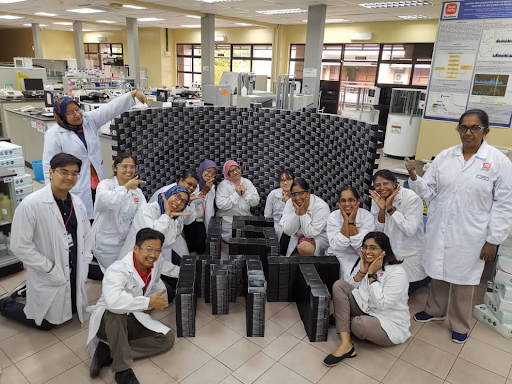
Using a commercial population of oil palms, their researchers investigated a range of predictive models for genomic selection. Additional research allowed them to reduce the number of markers for each trait without significantly impacting the accuracy of trait prediction. Enabled by the high-throughput capacity of KASP assays running on a SNPline system, SDP generates 5,000,000 data points per month from 30,000 samples.
| “KASP genotyping chemistry is cost-effective and flexible since we needed low-throughput all the way to high-throughput.” - Dr. Sukganah Apparow, Manager of Molecular Breeding Laboratory, Sime Darby Plantation |
| --- |
The first GenomeSelect™ palms were planted in 2016 and a goal is set to replant using only GenomeSelect™ material by 2023. As a result of their oil palm genomic selection process, SDP’s GenomeSelect™ oil palm won the prestigious bronze Edison Award for ‘Sustainability’ as well as ‘Best Product Innovation’ at the Malaysia Dutch Business Council Innovation and Sustainability Awards. It is the first commercial success in the oil palm industry where deforestation is no longer required for commercial planting of oil palms to support food security in a growing global population.
Learn more about the collaboration to scale up cost-effective genotyping for more sustainable oil palm production.
[](https://cta-redirect.hubspot.com/cta/redirect/54061/6afa444c-ec14-41b5-82eb-9fb0c6ce501f)
**References**
1. IUCN Issues brief: Palm oil and biodiversity. International Union for Conservation of Nature. [https://www.iucn.org/resources/issues-briefs/palm-oil-and-biodiversity](https://www.iucn.org/resources/issues-briefs/palm-oil-and-biodiversity). Accessed January 7, 2022.
2. Meijaard E, Garcia-Ulloa J, Sheil D, Wich SA, Carlson KM, Juffe-Bignoli D, Brooks TM. Oil palm and biodiversity. A situation analysis by the IUCN Oil Palm Task Force. International Union for Conservation of Nature. Gland, Switzerland. [https://portals.iucn.org/library/sites/library/files/documents/2018-027-En.pdf](https://portals.iucn.org/library/sites/library/files/documents/2018-027-En.pdf). Published 2018. Accessed January 7, 2022.
3. Kwong QB, Ong AL, Teh CK, Chew FT, Tammi M, Mayes S, Kulaveerasingam H, Yeoh SH, Harikrishna JA, Appleton DR. Genomic Selection in Commercial Perennial Crops: Applicability and Improvement in Oil Palm (*Elaeis guineensis*). *Scientific Reports*. 7, 2872 [https://doi.org/10.1038/s41598-017-02602-6](https://doi.org/10.1038/s41598-017-02602-6). Published 2017. Accessed January 7, 2022.
- [**](http://www.facebook.com/sharer.php?u=https://blog.biosearchtech.com/improving-the-sustainability-of-oil-palm-breeding-programmes-using-marker-assisted-selection)
- [** ](http://www.linkedin.com/shareArticle?url=https://blog.biosearchtech.com/improving-the-sustainability-of-oil-palm-breeding-programmes-using-marker-assisted-selection&title=Improving%20the%20sustainability%20of%20oil%20palm%20breeding%20programmes%20using%20marker-assisted%20selection)
- [** ](http://twitter.com/intent/tweet?text=Improving%20the%20sustainability%20of%20oil%20palm%20breeding%20programmes%20using%20marker-assisted%20selection&url=https://blog.biosearchtech.com/improving-the-sustainability-of-oil-palm-breeding-programmes-using-marker-assisted-selection)
- [** ](mailto:?subject=I%20wanted%20you%20to%20see%20this%20post&body=Check%20out%20this%20post%20.)
#### Like what you see? Share with a friend or comment below.
[** ](https://www.facebook.com/sharer/sharer.php?u=https://blog.biosearchtech.com/improving-the-sustainability-of-oil-palm-breeding-programmes-using-marker-assisted-selection)
[** ](https://www.linkedin.com/shareArticle?mini=true&url=https://blog.biosearchtech.com/improving-the-sustainability-of-oil-palm-breeding-programmes-using-marker-assisted-selection)
[** ](https://twitter.com/intent/tweet?url=https://blog.biosearchtech.com/improving-the-sustainability-of-oil-palm-breeding-programmes-using-marker-assisted-selection&text=Sustainable%20Oil%20Palm%20Breeding%20Programmes%20Using%20Marker%20Selection)
[** ](mailto:?subject=I%20wanted%20you%20to%20see%20this%20post&body=Check%20out%20this%20post%20.)
## Subscribe to our blog
## BiosearchTech Blog alerts
Don’t forget to subscribe to the latest scientific content curated * by* scientists * for *scientists. You’ll receive an email twice a month or less.
### Subscribe to our blog
### About LGC, Biosearch Technologies
LGC, Biosearch Technologies is the complete Genomics portfolio from LGC. Providing genomic analysis tools, instrumentation and services to the genomic scientific discovery sector worldwide, with focus on across ag bio, pharma and molecular diagnostics. Visit our home page to [view our products and services](http://www.biosearchtech.com).
### Posts by category
- [Agrigenomics (37)](https://blog.biosearchtech.com/topic/agrigenomics)
- [CPG (2)](https://blog.biosearchtech.com/topic/cpg)
- [Disease detection (14)](https://blog.biosearchtech.com/topic/disease-detection)
- [Enzymes (3)](https://blog.biosearchtech.com/topic/enzymes)
- [General science (90)](https://blog.biosearchtech.com/topic/general-science)
- [Genomics (48)](https://blog.biosearchtech.com/topic/genomics)
- [KASP (4)](https://blog.biosearchtech.com/topic/kasp)
- [Molecular diagnostics (53)](https://blog.biosearchtech.com/topic/molecular-diagnostics)
- [mRNA therapeutics (2)](https://blog.biosearchtech.com/topic/mrna-therapeutics)
- [New and Featured (2)](https://blog.biosearchtech.com/topic/new-and-featured)
- [Next generation sequencing (NGS) (16)](https://blog.biosearchtech.com/topic/next-generation-sequencing-ngs)
- [NGS-based genotyping (19)](https://blog.biosearchtech.com/topic/ngs-based-genotyping)
- [Nucleic acid extraction (11)](https://blog.biosearchtech.com/topic/nucleic-acid-extraction)
- [Nucleic acid therapeutics (15)](https://blog.biosearchtech.com/topic/nucleic-acid-therapeutics)
- [Oligo synthesis and modifications (41)](https://blog.biosearchtech.com/topic/oligo-synthesis-and-modifications)
- [oligos probes and primers (4)](https://blog.biosearchtech.com/topic/oligos-probes-and-primers)
- [PCR-based genotyping (21)](https://blog.biosearchtech.com/topic/pcr-based-genotyping)
- [qPCR (61)](https://blog.biosearchtech.com/topic/qpcr)
- [RNA FISH (22)](https://blog.biosearchtech.com/topic/rna-fish)
- [SARS-CoV-2 (28)](https://blog.biosearchtech.com/topic/sars-cov-2)
- [Targeted GBS (4)](https://blog.biosearchtech.com/topic/targeted-gbs)
### Posts by popularity
### Follow @BiosearchTech on Twitter
[Tweets by @BiosearchTech](https://twitter.com/BiosearchTech)
### Become a Fan on Facebook!
### Visit our website
[biosearchtech.com](https://www.biosearchtech.com/)
### Contact us
- [** Contact us ](https://www.biosearchtech.com/about-us/locations)
### Connect with us
- [Twitter ](https://twitter.com/LGCBiosearch)
- [** Facebook ](https://www.facebook.com/LGCBiosearch)
- [** Youtube ](https://www.youtube.com/user/lgcgroupvideo)
- [** LinkedIn ](https://www.linkedin.com/company/lgc-biosearch-technologies)
Copyright © 2023 LGC, Biosearch Technologies
### About Us
- [About LGC Biosearch Technologies](https://www.biosearchtech.com/about-us/inside-lgc-biosearch)
- [Careers](https://www.biosearchtech.com/our-company/careers)
- [Shop](https://www.biosearchtech.com/about-us/distributors)
### Stay in Touch
- [Contact us](https://www.biosearchtech.com/about-us/contact-us)
- [Join our mailing list](https://www.biosearchtech.com/)
-
- [** ](https://www.facebook.com/LGCBiosearch)
- [** ](https://www.youtube.com/user/lgcgroupvideo)
- [** ](https://www.linkedin.com/company/lgc-biosearch-technologies)
Copyright © 2024 LGC Biosearch Technologies
```json
{
"@context" : "https://schema.org",
"@type" : "BlogPosting",
"author" : {
"@type" : "Person",
"name" : "Biosearch Technologies",
"url" : "https://blog.biosearchtech.com/author/biosearch-technologies"
},
"dateModified" : "2024-02-08T06:54:54.552Z",
"datePublished" : "2022-03-08T21:00:03.000Z",
"headline" : "Sustainable Oil Palm Breeding Programmes Using Marker Selection",
"image" : [ "https://blog.biosearchtech.com/hubfs/oil-palm-fruit_1120x360.jpg" ],
"mainEntityOfPage" : {
"@id" : "https://blog.biosearchtech.com/improving-the-sustainability-of-oil-palm-breeding-programmes-using-marker-assisted-selection",
"@type" : "WebPage"
},
"publisher" : {
"@type" : "Organization",
"logo" : {
"@type" : "ImageObject",
"url" : "https://blog.biosearchtech.com/hubfs/LGC_D&G_Logos_RGB_LGC_D&G_Primary.png"
},
"name" : "Biosearch Technologies"
}
}
```