---
title: How to maximise siRNA synthesis yield and be more environmentally friendly
description: Discover how CPG optimisation delivers greater yield for siRNA synthesis with PrimeMax
image: https://blog.biosearchtech.com/hubfs/DPG-blog-header_1120x360_green.png
---
[](https://www.biosearchtech.com/)

[Blog](https://blog.biosearchtech.com) / How to maximise siRNA synthesis yield and be more environmentally friendly
# How to maximise siRNA synthesis yield and be more environmentally friendly
[Oligo synthesis and modifications](https://blog.biosearchtech.com/topic/oligo-synthesis-and-modifications) | [Nucleic acid therapeutics](https://blog.biosearchtech.com/topic/nucleic-acid-therapeutics)
**Time to read:** 4 minute read
Originally published : Mon, February 2, 2026 @ 2:43 PM
The scope and demand for [nucleic acid therapeutics](https://blog.biosearchtech.com/landscape-of-nucleic-acid-therapeutics) is growing rapidly. Initially confined to rare genetic diseases, these oligonucleotides are increasingly being tested for conditions ranging from cancer to infectious diseases.
The global market for nucleic acid therapeutics is predicted to almost triple in the next decade, from US$5.77 billion in 2024 to $17.02 billion by 2034.1 Meeting this strong demand for nucleic acid therapeutics will require more efficient manufacturing to deliver at scale.
Controlled pore glass (CPG) is key to one of the most popular ways of synthesising oligonucleotides. CPG acts as a solid support that binds the oligonucleotide as phosphoramidites add to the growing chain in each synthesis cycle.
The manufacturing and design of CPG can significantly influence the success and efficiency of the synthesis. In this blog post, we’ll take a look at the next generation of CPG and how it can deliver greater synthetic yield and be more environmentally sustainable.
#### **What is controlled pore glass?**
CPGs are microscopic particles of glass typically 100 μm across, about the width of a human hair. Manufacturers can make CPG in various shapes and designs to tailor their performance.
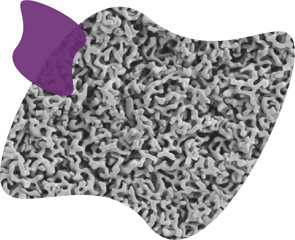Each CPG particle contains thousands of pores, which each have a vast number of branches that are just 0.05 μm wide. These deep pores are where the oligo synthesis occurs, building the nucleotide chain one by one.
Smaller pores (around 500–600 Å) mean there is a larger surface area for increased loading capacity and oligo yield. However, these smaller pores are more easily blocked by the growing oligonucleotide chain, which restricts the access of reagents and leads to incomplete synthesis.
Interrupting synthesis results in shortened molecules that might be missing just the last few nucleotides. These truncated impurities can be particularly difficult to remove from the final product as their size and charge are similar to the desired product.
The choice of CPG pore size is a balance between maximising yield versus the risk of truncated impurities. The length of the oligo being produced is one of the main factors that influences the ideal pore size.
For typical siRNA strands, 20–25 base pairs, a small pore size like 500 Å is suitable as it doesn’t substantially raise the risk of truncated impurities. 500 or 600 Å CPGs are commonly used for large-scale synthesis of therapeutic oligos.
Long oligonucleotides require much larger pore sizes, like 2000 or 3000 Å. This is often the case for guide RNA in CRISPR-based therapeutics. The larger pore size reduces steric hindrance, making the reagents more accessible and reducing truncation rates.
Polystyrene is another type of solid support that is popular for large-scale commercial synthesis due to its high yield compared to traditional CPG. However, a new era for CPG is emerging that can compete with polystyrene on both cost and performance.
#### Increase full-length oligo yield with PrimeMax siRNA CPG
The need for more efficient, scalable therapeutic oligo manufacturing has led LGC Biosearch Technologies™ to develop a new generation of CPG that is designed to meet future demands.
[PrimeMax™ siRNA CPG](https://info.biosearchtech.com/primemax-sirna-cpg) increases the net yield of full-length product by ensuring CPGs are optimally loaded with the 3' nucleoside. Overloading the CPG can cause steric crowding at the surface, reducing coupling efficiencies in the early synthesis cycles. This leads to lower yield and purity of the full-length product.
We collaborated[ with Alnylam Pharmaceuticals](https://lgc.canto.global/direct/document/55eh6rj5pd2vp8fpm1hdvtjk10/DazlQCK6fPwg6TZFWL_P1KcIUbI/original?content-type=application%2Fpdf&name=poster_enhancing-yield-productivity-optimization-CPG-Solid-Support.pdf) to synthesise an siRNA antisense strand of the drug lumasiran using PrimeMax siRNA CPG. This showed that optimising the loading to suit the surface area of the CPG can improve efficiency and increase the Net Full-Length Product (FLP) Yield for siRNA.
In [our latest research poster](https://info.biosearchtech.com/primemax-sirna-cpg-optimising-surface-area-loading-and-pore-architecture-for-enhanced-synthesis-yield-and-consistency), we've shown that this surface area normalised loading results in a 50% increase in Net FLP Yield for siRNA compared to existing products.
Reducing the PrimeMax CPG pore diameter to roughly 400 Å preserves the product purity of a 23-mer siRNA antisense strand while increasing the loading capacity (Figure 1). This higher surface area glass strikes the optimal balance of increased yield of full-length products without raising contamination from late-eluting impurities.
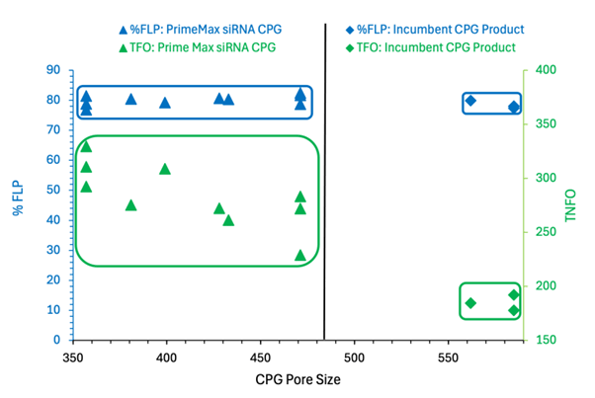
***Figure 1**. The purity of the full-length product (%FLP, blue, left axis) remains high across all CPG pore sizes. Meanwhile the total new FLP yield (TNFO, green, right axis) is significantly higher at <400 Å pore size than for larger pores.*
The increased surface area of the PrimeMax 400 Å CPG offers approximately a 40% productivity gain compared to the current CPG product. This provides a substantial performance boost for manufacturing oligonucleotide products on a large scale.
#### NextGen manufacturing for a sustainable future

LGC Biosearch Technologies puts sustainability at the heart of our operations. Our team is relentlessly experimenting with new ways to streamline our production and reduce our environmental impact.
PrimeMax CPG is made with our new NextGen manufacturing process, which offers a number of benefits:
- Significantly lower energy use
- Wastewater volume reduced by 50%
- Shorter processing time (two weeks)
- Production capacity increased by 200%
This new production system is a major step in putting this resource-intensive process on a more sustainable footing. The improved efficiencies also allow us to meet customer demand for high-quality products while keeping them cost-effective.
#### Market-leading CPG for efficiency and sustainability

Our advanced CPG production techniques were developed originally in our Prime Synthesis business, which has produced controlled pore glass since the 1980s and supplied the Human Genome Project.
Now, as Biosearch Technologies, we’re a strategic partner to many leading oligo therapeutic companies and oligo CMOs. Our CPG products form an essential part of commercial drug development.
We adhere to ISO 9001 manufacturing standards to deliver the most reliable products, giving customers peace of mind.
We are continuing to lead the market in pushing the boundaries of high-performance CPG. The PrimeMax range is our latest innovation, offering higher surface area and optimised loading to maximise synthesis scale and yield of full-length products. It’s available as a wide range of functionalised CPGs to modify the 3' end of the oligonucleotide, providing a versatile solution for manufacturing innovative therapeutics.
PrimeMax is reimagining CPG for modern synthesis needs. It offers greater output at the same time as reducing its environmental footprint – a win all round for manufacturers, consumers and the planet.
We have shown the value of PrimeMax in siRNA synthesis, with our 400 Å products delivering a 40% productivity gain. However, our surface area normalised loading approach can be applied to other modalities and oligo lengths. [Get in touch with us](https://info.biosearchtech.com/primemax-sirna-cpg#enquire-today) to find out how we can support your needs.
[](https://cta-redirect.hubspot.com/cta/redirect/54061/814ebde7-a959-4572-a4b9-0204b87d2f90)
---
#### Related Post
- [Nucleic Acid Therapeutics Toolbox: Givosiran](https://blog.biosearchtech.com/nucleic-acid-therapeutics-toolbox-givosiran)
---
#### Reference
1. Precedence Research (2025) Nucleic Acid Therapeutics Market Poised for Strong Growth Driven by RNA and Gene Therapy Advances [https://www.precedenceresearch.com/nucleic-acid-therapeutics-market](https://www.precedenceresearch.com/nucleic-acid-therapeutics-market)
- [**](http://www.facebook.com/sharer.php?u=https://blog.biosearchtech.com/how-to-maximise-sirna-synthesis-yield-and-be-more-environmentally-friendly)
- [** ](http://www.linkedin.com/shareArticle?url=https://blog.biosearchtech.com/how-to-maximise-sirna-synthesis-yield-and-be-more-environmentally-friendly&title=How%20to%20maximise%20siRNA%20synthesis%20yield%20and%20be%20more%20environmentally%20friendly)
- [** ](http://twitter.com/intent/tweet?text=How%20to%20maximise%20siRNA%20synthesis%20yield%20and%20be%20more%20environmentally%20friendly&url=https://blog.biosearchtech.com/how-to-maximise-sirna-synthesis-yield-and-be-more-environmentally-friendly)
- [** ](mailto:?subject=I%20wanted%20you%20to%20see%20this%20post&body=Check%20out%20this%20post%20.)
#### Like what you see? Share with a friend or comment below.
[** ](https://www.facebook.com/sharer/sharer.php?u=https://blog.biosearchtech.com/how-to-maximise-sirna-synthesis-yield-and-be-more-environmentally-friendly)
[** ](https://www.linkedin.com/shareArticle?mini=true&url=https://blog.biosearchtech.com/how-to-maximise-sirna-synthesis-yield-and-be-more-environmentally-friendly)
[** ](https://twitter.com/intent/tweet?url=https://blog.biosearchtech.com/how-to-maximise-sirna-synthesis-yield-and-be-more-environmentally-friendly&text=How%20to%20maximise%20siRNA%20synthesis%20yield%20and%20be%20more%20environmentally%20friendly)
[** ](mailto:?subject=I%20wanted%20you%20to%20see%20this%20post&body=Check%20out%20this%20post%20.)
## Subscribe to our blog
## BiosearchTech Blog alerts
Don’t forget to subscribe to the latest scientific content curated * by* scientists * for *scientists. You’ll receive an email twice a month or less.
### Subscribe to our blog
### About LGC, Biosearch Technologies
LGC, Biosearch Technologies is the complete Genomics portfolio from LGC. Providing genomic analysis tools, instrumentation and services to the genomic scientific discovery sector worldwide, with focus on across ag bio, pharma and molecular diagnostics. Visit our home page to [view our products and services](http://www.biosearchtech.com).
### Posts by category
- [Agrigenomics (37)](https://blog.biosearchtech.com/topic/agrigenomics)
- [CPG (2)](https://blog.biosearchtech.com/topic/cpg)
- [Disease detection (14)](https://blog.biosearchtech.com/topic/disease-detection)
- [Enzymes (3)](https://blog.biosearchtech.com/topic/enzymes)
- [General science (90)](https://blog.biosearchtech.com/topic/general-science)
- [Genomics (48)](https://blog.biosearchtech.com/topic/genomics)
- [KASP (4)](https://blog.biosearchtech.com/topic/kasp)
- [Molecular diagnostics (53)](https://blog.biosearchtech.com/topic/molecular-diagnostics)
- [mRNA therapeutics (2)](https://blog.biosearchtech.com/topic/mrna-therapeutics)
- [New and Featured (2)](https://blog.biosearchtech.com/topic/new-and-featured)
- [Next generation sequencing (NGS) (16)](https://blog.biosearchtech.com/topic/next-generation-sequencing-ngs)
- [NGS-based genotyping (19)](https://blog.biosearchtech.com/topic/ngs-based-genotyping)
- [Nucleic acid extraction (11)](https://blog.biosearchtech.com/topic/nucleic-acid-extraction)
- [Nucleic acid therapeutics (15)](https://blog.biosearchtech.com/topic/nucleic-acid-therapeutics)
- [Oligo synthesis and modifications (41)](https://blog.biosearchtech.com/topic/oligo-synthesis-and-modifications)
- [oligos probes and primers (4)](https://blog.biosearchtech.com/topic/oligos-probes-and-primers)
- [PCR-based genotyping (21)](https://blog.biosearchtech.com/topic/pcr-based-genotyping)
- [qPCR (61)](https://blog.biosearchtech.com/topic/qpcr)
- [RNA FISH (22)](https://blog.biosearchtech.com/topic/rna-fish)
- [SARS-CoV-2 (28)](https://blog.biosearchtech.com/topic/sars-cov-2)
- [Targeted GBS (4)](https://blog.biosearchtech.com/topic/targeted-gbs)
### Posts by popularity
### Follow @BiosearchTech on Twitter
[Tweets by @BiosearchTech](https://twitter.com/BiosearchTech)
### Become a Fan on Facebook!
### Visit our website
[biosearchtech.com](https://www.biosearchtech.com/)
### Contact us
- [** Contact us ](https://www.biosearchtech.com/about-us/locations)
### Connect with us
- [Twitter ](https://twitter.com/LGCBiosearch)
- [** Facebook ](https://www.facebook.com/LGCBiosearch)
- [** Youtube ](https://www.youtube.com/user/lgcgroupvideo)
- [** LinkedIn ](https://www.linkedin.com/company/lgc-biosearch-technologies)
Copyright © 2023 LGC, Biosearch Technologies
### About Us
- [About LGC Biosearch Technologies](https://www.biosearchtech.com/about-us/inside-lgc-biosearch)
- [Careers](https://www.biosearchtech.com/our-company/careers)
- [Shop](https://www.biosearchtech.com/about-us/distributors)
### Stay in Touch
- [Contact us](https://www.biosearchtech.com/about-us/contact-us)
- [Join our mailing list](https://www.biosearchtech.com/)
-
- [** ](https://www.facebook.com/LGCBiosearch)
- [** ](https://www.youtube.com/user/lgcgroupvideo)
- [** ](https://www.linkedin.com/company/lgc-biosearch-technologies)
Copyright © 2024 LGC Biosearch Technologies
```json
{
"@context" : "https://schema.org",
"@type" : "BlogPosting",
"author" : {
"@type" : "Person",
"name" : "Biosearch Technologies",
"url" : "https://blog.biosearchtech.com/author/biosearch-technologies"
},
"dateModified" : "2026-02-04T17:04:28.350Z",
"datePublished" : "2026-02-04T16:00:00.000Z",
"headline" : "How to maximise siRNA synthesis yield and be more environmentally friendly",
"image" : [ "https://blog.biosearchtech.com/hubfs/DPG-blog-header_1120x360_green.png" ],
"mainEntityOfPage" : {
"@id" : "https://blog.biosearchtech.com/how-to-maximise-sirna-synthesis-yield-and-be-more-environmentally-friendly",
"@type" : "WebPage"
},
"publisher" : {
"@type" : "Organization",
"logo" : {
"@type" : "ImageObject",
"url" : "https://blog.biosearchtech.com/hubfs/LGC_D&G_Logos_RGB_LGC_D&G_Primary.png"
},
"name" : "Biosearch Technologies"
}
}
```